One of my random interests for the past couple years has been university steam tunnels. I find myself repeatedly entranced by the secret network of tunnels and pipes that underlies my college campus. Despite their purpose being well-known and mundane (transportation of steam and data through pipes and wires), the tunnels themselves hold an ethereal quality: winding, narrow pathways that are just out of reach of light and the populous. At large college campuses, these tunnels are often a century old, connect to a series of inaccessible basements, and are strictly off-limits to all but construction workers and repairmen. Yet, they seem to beckon students, offering a rare form of exploration that is somehow simultaneously under their feet yet outside of view.
If you go digging (metaphorically) for information on steam tunnels, you will likely find yourself within a different kind of underground network: the inter-network of late 1990s/early 2000s websites of earlier explorers. There is an unexpected overlap here of computer hacker culture (referring to the older meaning of 'hack') and urban explorers. It seems that the obsessive and slightly transgressive curiosity that compels someone down a grate at 1am is the same energy that built the early web. College students of the 1990s were pioneering internet communities and simultaneously using those communities to publicize their physical exploits without the immediate scrutiny of their universities.
There is a surprising number of poetic parallels here. Hacker culture and urban explorers both thrive on bending the rules, exploring concealed networks, and run through the miles of cables physically in the ground.
My favorite example of this phenomenon is still alive on the internet over 25 years later through the Open Computing Facility (OCF). The OCF (as well as other CS-related organizations at Berkeley) were even based underground, at the WEB: Workstation at Evans' Basement. (You can read more about this at Collected Memories of Evans Hall and soda.csua.berkeley.edu.) Apparently, there is something in the air in the ground at Berkeley.
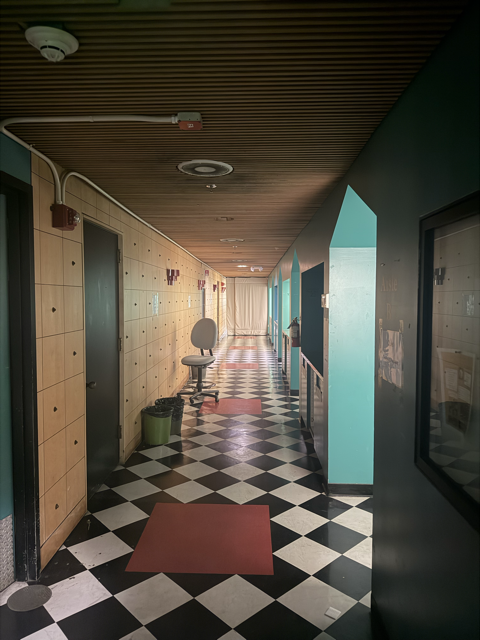
As an aside, here is a picture of Evans basement that I took in 2025, which I am told is essentially unchanged since the 1980s. This is not difficult to believe given that multiple bulletin boards in the area still contain several notices dated to the mid 1990s.
In particular, the OCF still hosts the UnderCal webapge: https://www.ocf.berkeley.edu/~fricke/undercal. This webpage documents a few friends' unauthorized expedition into the Berkeley steam tunnels, as told through pictures, emails, and a map. In the words of the website's author, Tobin Fricke:
``Where is the steam tunnel culture here? This is Berkeley! You would think that, of all places, there would be a culture here,'' I pondered verbally to Brandon.
``I don't know. But that's only one way in which Berkeley isn't what it seems. I guess they're just into other things. Protests.'' Brandon speculated.
``I suppose, then, that it's up to us.''
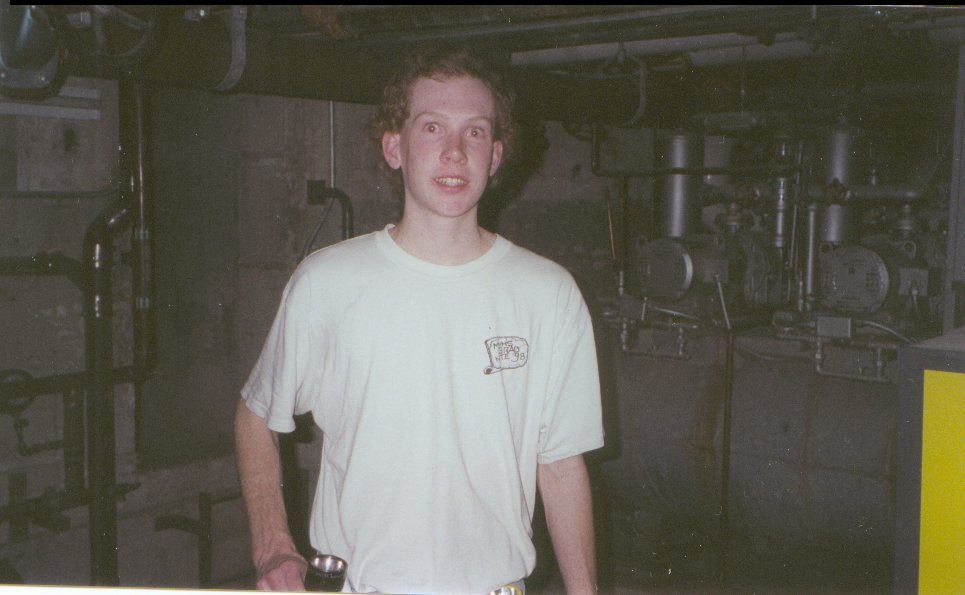
Here is an accompanying picture, which I believe depicts Fricke within the tunnels:
In addition to surprisingly strong design skills (see the logo below), the group possessed instincts akin to an amateur historians seeking to document their environment.

The group documents their path through a handwritten map, correct misconceptions spread by the Daily Cal, and are honest about the safety risks. There is something surprisingly noble about these activities, despite being frowned upon by the university (for good reason).
To be clear, I am not recommending that you explore any steam tunnels. It is illegal (trespassing) and dangerous (leaks of boiling pipes are common, asbestos is everywhere, and more). Following the uptick in interest of the Berkeley steam tunnels, the Assistant Vice Chancellor had to put out a statement titled Campus Steam Tunnels Are Not Toys. The originally link by the student newspaper is no longer online, but you can read the archive at archive.org where he cites the following risks: "Danger of high-pressure steam burns", "Exposure to asbestos", "Electrocution", and "Vandalism". Also, you are much more likely to get caught doing this kind of activity today with the prevalence of alarms and cameras.
With that said, I think we can still appreciate the explorations done in the past and witness it vicariously: that is the power of the internet, which itself was being developed, at least partially, in the Berkeley ground.
Last updated March 23, 2026